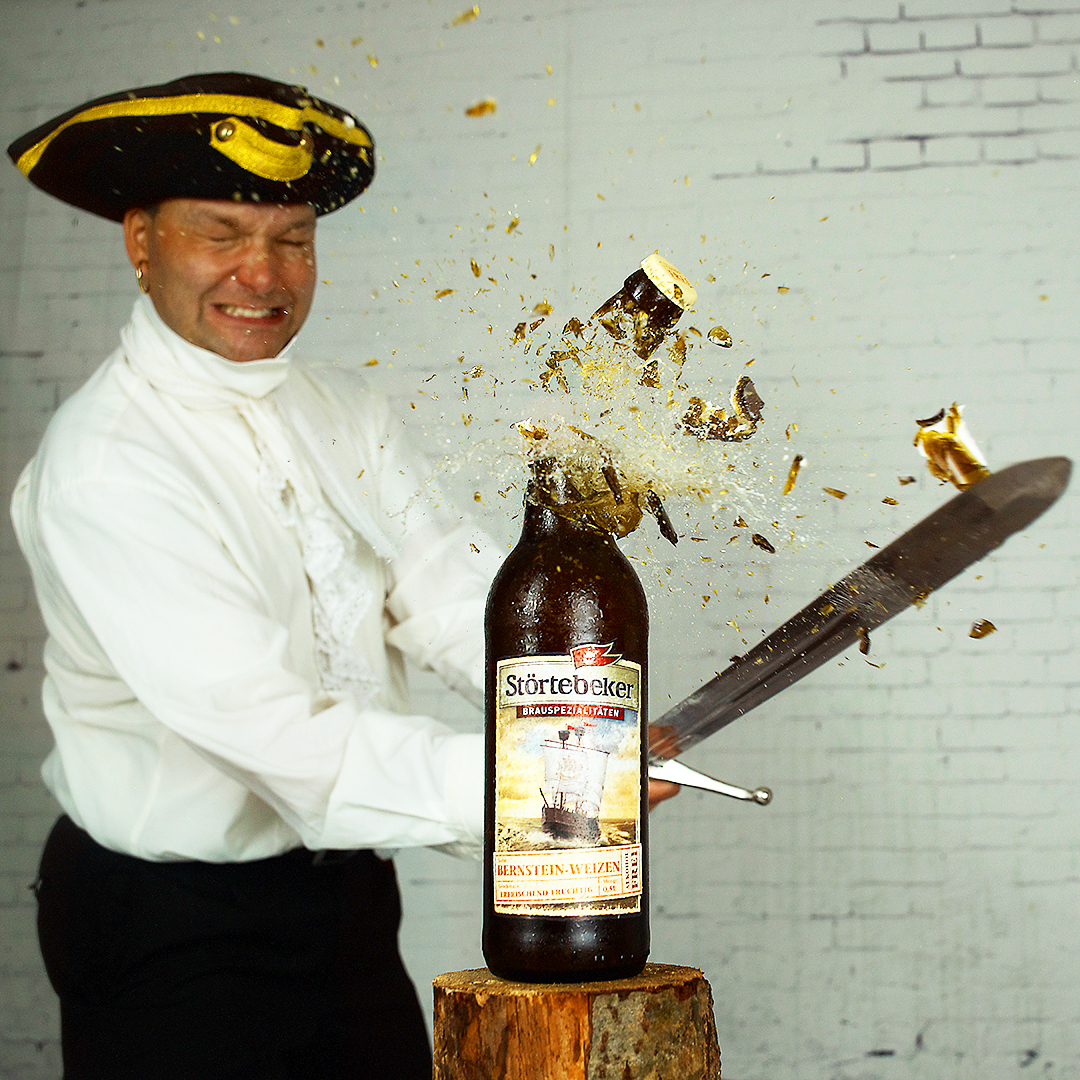
High-speed photography captures fragments of time that are normally lost to the human eye. While artificial intelligence can generate realistic images today, authentic high-speed imaging offers unmatched realism and factual verification. With AI, you can never be certain if a fast-moving event actually unfolded the way it is displayed. Genuine high-speed photography proves the reality of the moment—such as the exact millisecond a sword slices through the neck of a bottle.
Based in Southern Finland, I provide professional high-speed imaging in North Europe and elsewhere. Freeze millisecond actions with authentic clarity.
Two Methods of High-Speed Imaging
High-speed imaging is divided into moving images (video) and still photography.
High-speed video recording captures footage at significantly higher frame rates than standard video—often at 1,000 frames per second or more. When played back at normal speed, rapid events appear as highly detailed slow-motion video (high-speed video).
1. High-Speed Video & Slow-Motion Production
This technique allows us to analyze moments that occur too fast for normal human perception, such as liquid splashes, breaking objects, or rapid mechanical movements.
Primary Applications:
- Commercials & Marketing: Add premium visual flair to product launches and promotional campaigns.
- Industrial Troubleshooting: Detect mechanical faults and timing errors in fast-moving production machinery.
- Scientific Research & Analysis: Study physical reactions, impacts, and material behaviors.
- Sports Performance Coaching: Fine-tune athletic techniques and high-speed movements.
2. High-Speed Still Photography
The core of high-speed still photography relies on ultra-short electronic flash durations. The process typically takes place in a dark room with a long exposure of a few seconds, making the flash the sole light source. This intense, microsecond burst of light completely freezes rapid motion in place.
To capture the precise moment of impact, specialized electronic triggers and signal delays are used. For example, an acoustic sensor can detect a sound pulse and trigger the flash after a precise millisecond delay. Still high-speed photography is a meticulous process of trial and error. After each shot, the studio lights are turned on, the area is cleaned, and the setup is reset for the next attempt.
Specialized high-speed flash gear can reach a flash duration of approximately one microsecond—fast enough to freeze a bullet splitting a playing card.
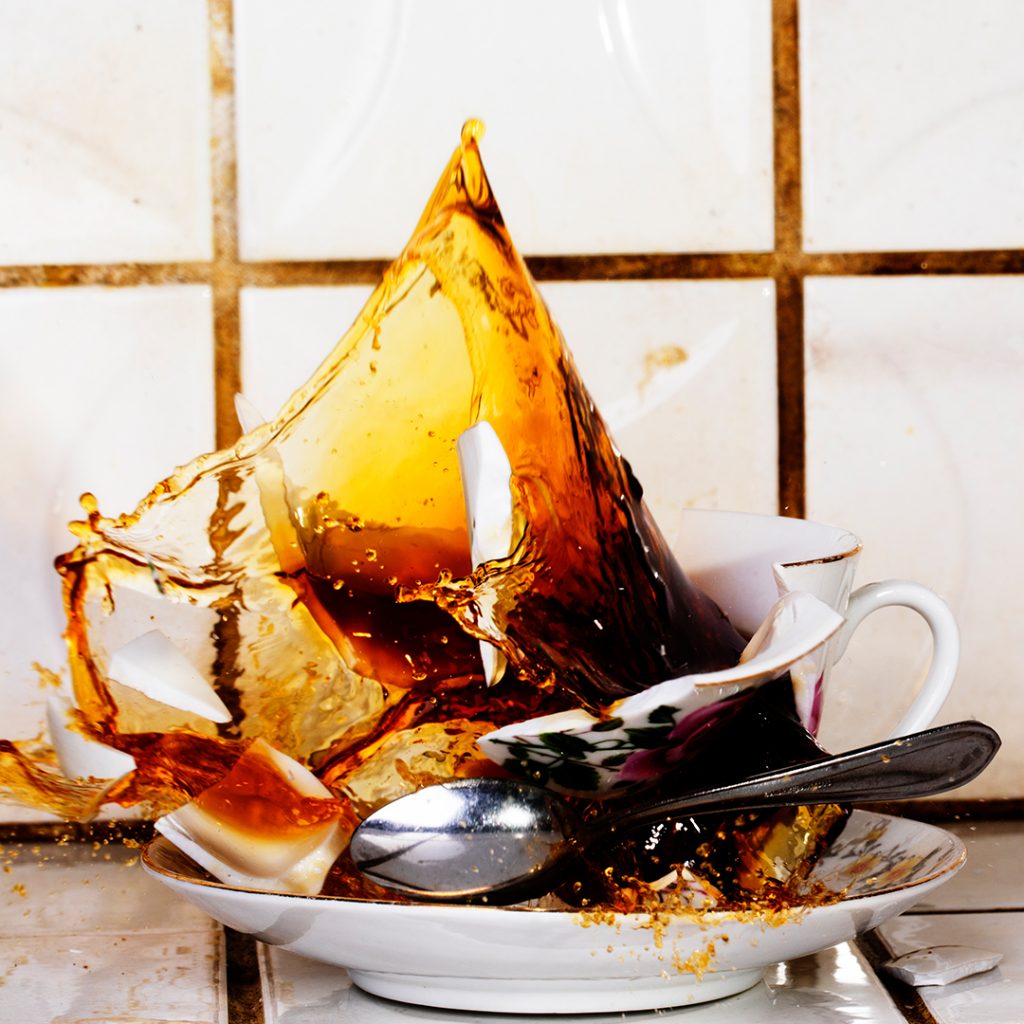
When a bullet meets a coffee cup.
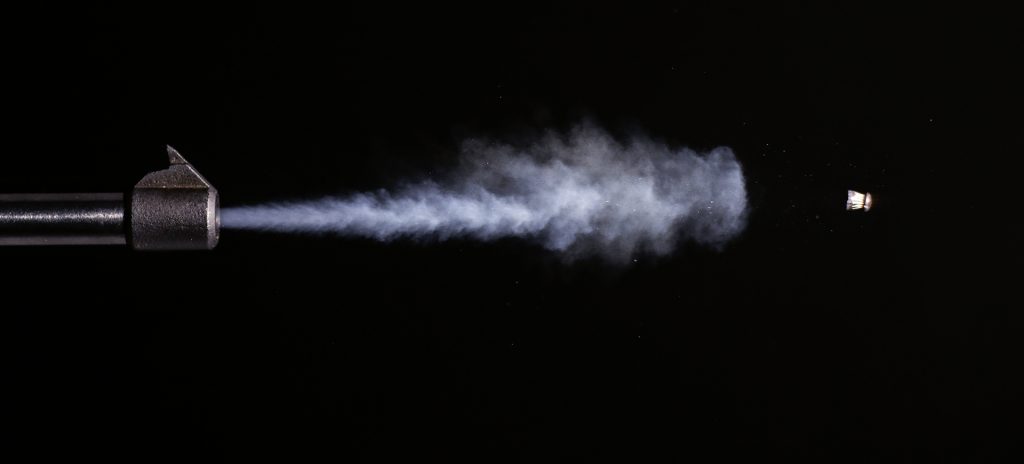
Years ago I built a high-speed flash with a flash duration of about a microsecond. I dismantled it because it was life-threatening. This is the only successful photo taken with it.
The Legacy of High-Speed Imaging
High-speed photography was pioneered by MIT Professor Harold “Doc” Edgerton. He was the first to successfully photograph a rifle bullet piercing a playing card, the detonation of an atomic bomb, and the crown-like splash of a falling droplet. He also pioneered stroboscopic photography and high-speed motion pictures, which have now transitioned from traditional film to modern digital video.
Pricing & Bookings
I provide on-site high-speed imaging services tailored for commercial, industrial, and artistic projects.
- High-Speed Still Photography: Requires a full day of setup, calibration, and execution. Flat rate: €1,000. Contact info@mattipirhonen.eu.
- High-Speed Video Production: Typically requires a day of on-site shooting. Contact for a customized corporate quote based on your specific requirements. Contact info@mattipirhonen.eu.
Whether you need to troubleshoot a manufacturing defect in Espoo, capture product marketing material in Helsinki, or film creative slow-motion content in Raseborg, authentic high-speed imaging delivers precision results.
Once I shot a bulb with air rifle. See https://www.youtube.com/watch?v=q_lziGDEJrE
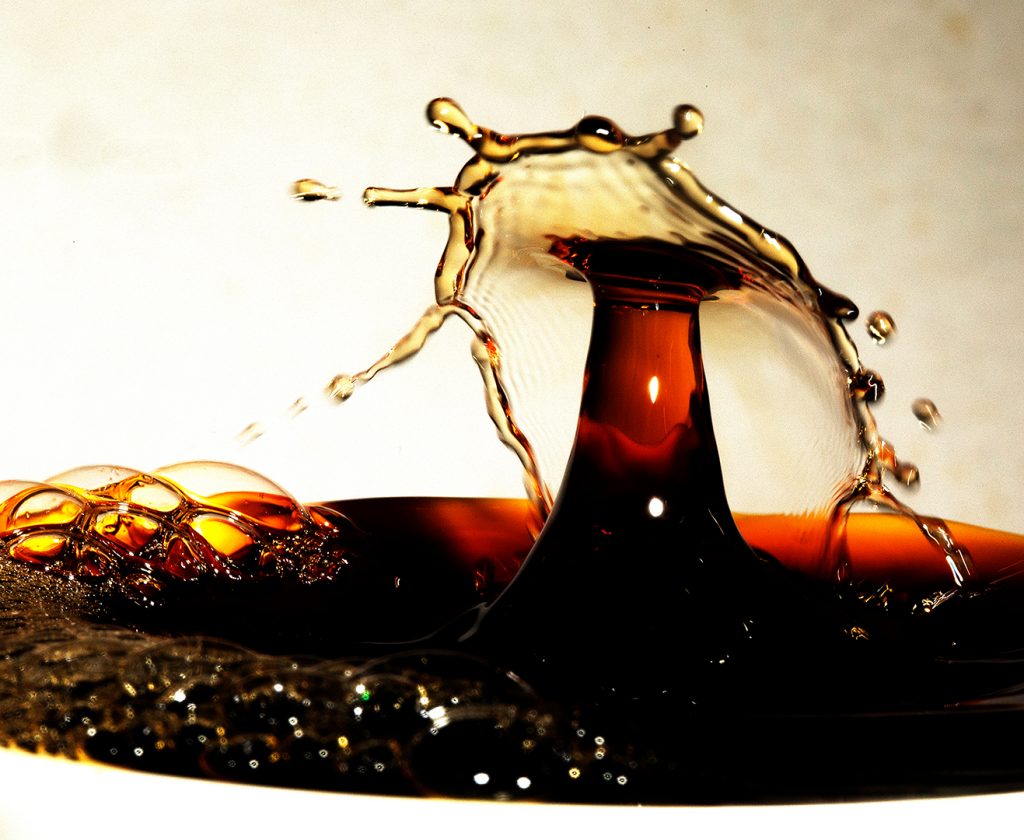
A coffee drop meeting another drop in the air.
See more my high speed photos. I have had two exhibitions.